Most people think 3D printing happens in a vacuum. You hit "order" and a machine spits out a finished product, ready to go. The reality is messier and more interesting than that.
This post is a walk through our workshop — the real steps that happen between when an order arrives and when it ships out. No marketing gloss. Just the actual work.
The Enquiry Lands
Every order starts with a brief. Sometimes it's crystal clear — "I want ten of these in grey PLA, 50mm diameter, shipped by Friday." Sometimes it's a sketch, a photo, or a vague idea. Either way, the first job is to understand what we're actually making.
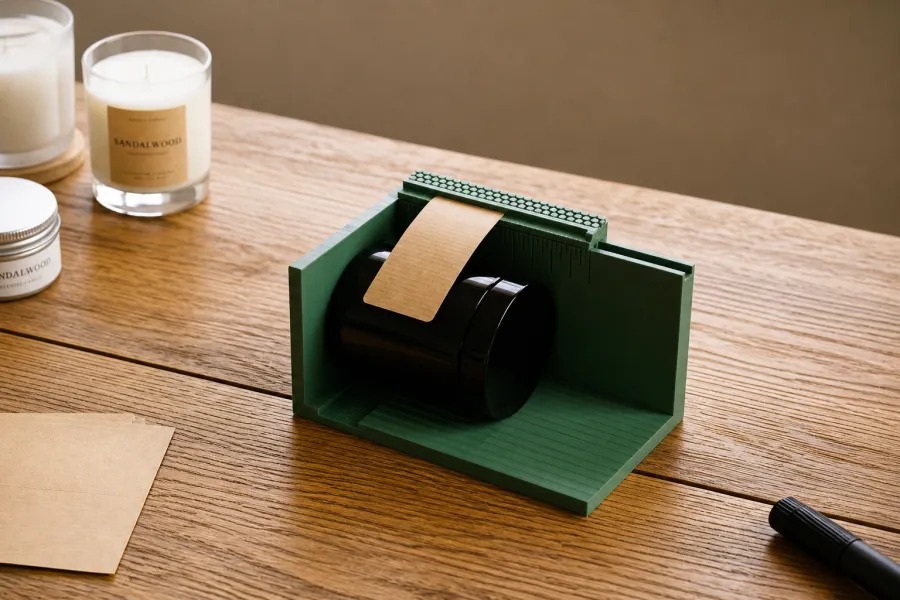
For standard products, this is quick. A customer orders the Label Helper, selects their hand orientation and the colour option, and we move straight to printing. For custom work, it's more involved. We ask the questions that matter: What's it for? How will it be used? What material makes sense? Do the dimensions work?
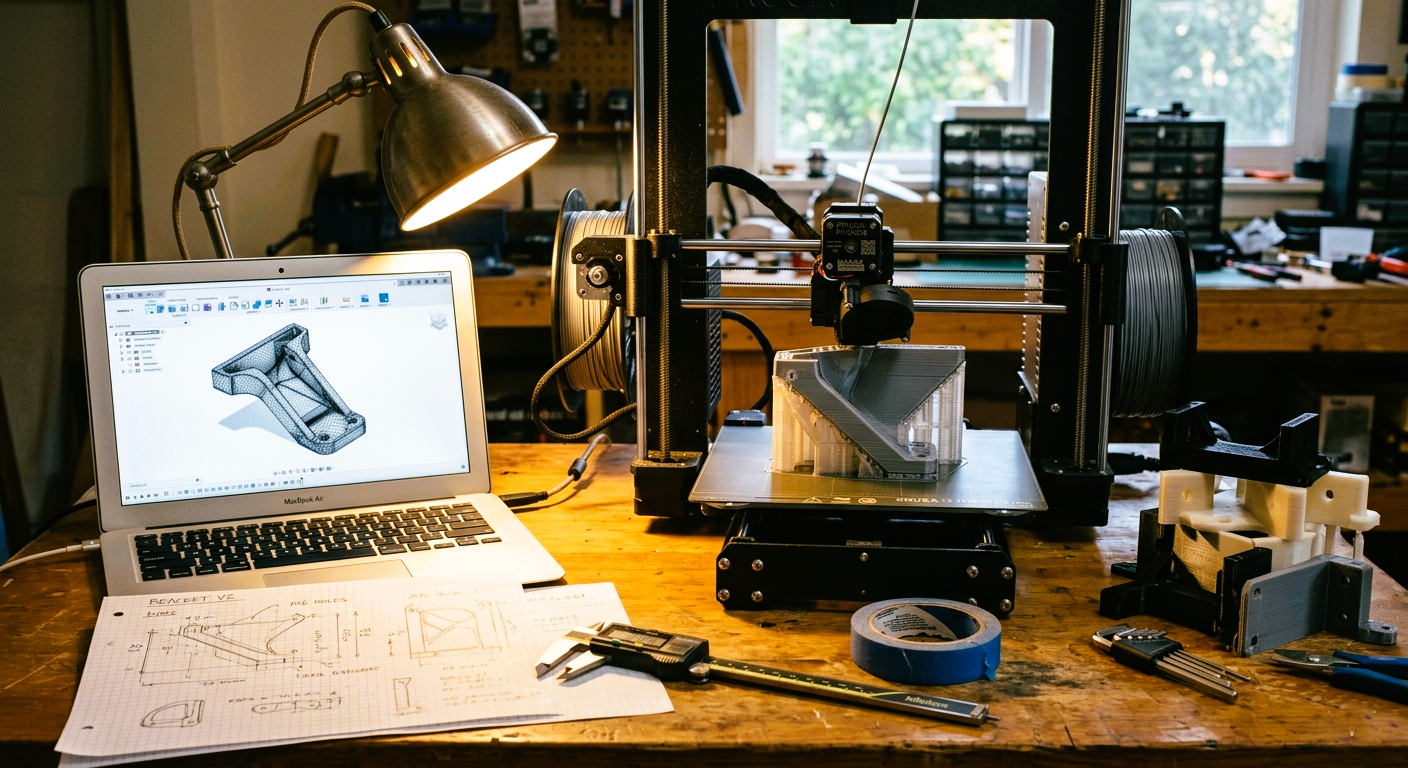
This bit happens at a desk, with a laptop, a cup of tea, and sometimes a lot of back-and-forth messaging. It's where we catch misunderstandings before they become expensive reprints.
Design and Planning
If we're working from an STL file the customer provides, we check it. We look for problems that would break a print — overhangs that won't work, walls too thin, dimensions that don't make sense. We ask questions. We suggest fixes.
If we're designing from scratch, we start with sketches. Rough ideas on paper. What are the constraints? What materials will work? What's the print time? Once we have a direction, we move to CAD — proper 3D models, technical drawings, measurements locked in.
The customer sees a preview render before anything prints. We iterate. Sometimes it takes one round. Sometimes it takes five. We don't print until both of us agree it's right.
This is also where we think about the material. PLA works for decorative pieces and light-duty parts. PETG is stronger and more flexible — better for brackets and functional parts that might flex or take a knock. Resin is an option for detailed miniatures or parts that need a smooth finish. We recommend based on the job, not based on what we want to print.
Printing
Once the design is locked in, we prepare the file. Orientation matters — how the part sits on the build plate affects strength, print time, and how much material it needs. A part standing tall prints differently than a part lying flat.
We load the right material. Check the nozzle. Set the temperature. Slice the file so the printer knows what to do. Then we hit print and let it run.
This is where time comes in. A small decorative piece might print in a few hours. A large functional bracket can take 20+ hours. A batch of 20 items takes days. We schedule jobs to keep multiple printers working — downtime is wasted money and missed deadlines.
We don't walk away. Prints are monitored. Sometimes things go wrong — a nozzle clogs, a part warps, the bed adhesion fails. When it does, we catch it early and reprint. Better to lose a few hours than to send out a broken part.
Finishing
The print comes off the build plate, and the real work often just begins.
We remove support material — the temporary scaffolding that held the part up while it printed. That's careful work with pliers and a file. We sand rough edges. We clean the surface. For some parts, that's enough. For others, we go further.
If a part needs painting, we prime it first. We sand again. We paint. Sometimes one coat, sometimes three. Drying time sits between coats. For assembly jobs, we fit parts together, test them, make sure everything works.
The finishing phase is where a 3D print goes from "looks like it came from a 3D printer" to "looks like a finished product." It's the difference between a rough prototype and something a customer is happy to put on a shelf or use every day.
Quality Check
Before anything ships, we inspect it. Does it match the approved design? Are the dimensions correct? Is the finish good? Are there any defects we missed?
We compare it to the preview render. We check measurements. We hold it up to light to look for thin spots or problems. For functional parts, we test them if it's safe to do so.
If something isn't right, it doesn't ship. We fix it or reprint it. This is non-negotiable. A part that breaks a week after arrival costs us trust and goodwill — two things that matter far more than the material cost of a reprint.
Packing and Despatch
Once an order passes QC, we pack it. We use protective packaging — bubble wrap for delicate pieces, card dividers for batches, kraft paper if it's a simple item. We add a packing slip so the customer knows what they've received. We label clearly.
We hand it to the courier with a tracking number. We typically dispatch within a day or two of completion, but delivery depends entirely on the courier service. Your tracking number will show exactly where your order is, so you can see the estimated arrival date as soon as it ships.
What You Don't See
There's a lot that happens off-camera. We maintain the printers — cleaning nozzles, levelling beds, replacing worn parts. We test new materials to make sure we understand them before we print with them for a customer. We track inventory — filament, packaging, spare parts. We read feedback and adjust how we work based on what customers tell us.
We also make mistakes. A part fails mid-print because the adhesion wasn't quite right. A customer's expectations don't match reality because we didn't ask the right question upfront. A material doesn't perform as well as we hoped. When that happens, we own it, fix it, and change something so it doesn't happen again.
Why You Should Know This
Here's the honest reason we're telling you this: 3D printing looks magical from the outside. Push a button, get a part. But the magic is in the planning, the iterations, the problem-solving, and the attention to detail. We spend time on the parts you don't see so that what you receive is right.
That's why we can't compete on price with automated print farms that churn out volumes. And that's why we don't try. What we do is think through every order, catch problems early, and make sure what we send you is something we'd be happy to use ourselves.
Next time you receive a print from us, you'll know the hands that made it, the decisions that went into it, and the care that was taken along the way.