Bespoke Curtain Ring Inserts: Developing a Custom 3D Printed Replacement
A small plastic insert can be the part that stops an otherwise usable fitting from working properly. For this bespoke project, a customer needed replacement inserts for her C-shaped curtain rings, while keeping the existing metal rings themselves.
She had found replacements sold together with complete rings, but only needed the inner plastic pieces. She contacted Creative 3D Prints to explore whether we could design and print those parts separately.
Understanding how the insert needs to work
The brief involved more than matching a curved shape. The insert needed to bend into the metal ring, hold its form during use and provide a smooth contact surface against the curtain rail.
The customer reported that the existing inserts could break over time and that the rings tended to snag around the rail's corner sections. She also supplied photographs showing those areas.
Those details helped define what the replacement needed to do, alongside how it needed to fit.
Working from the original parts
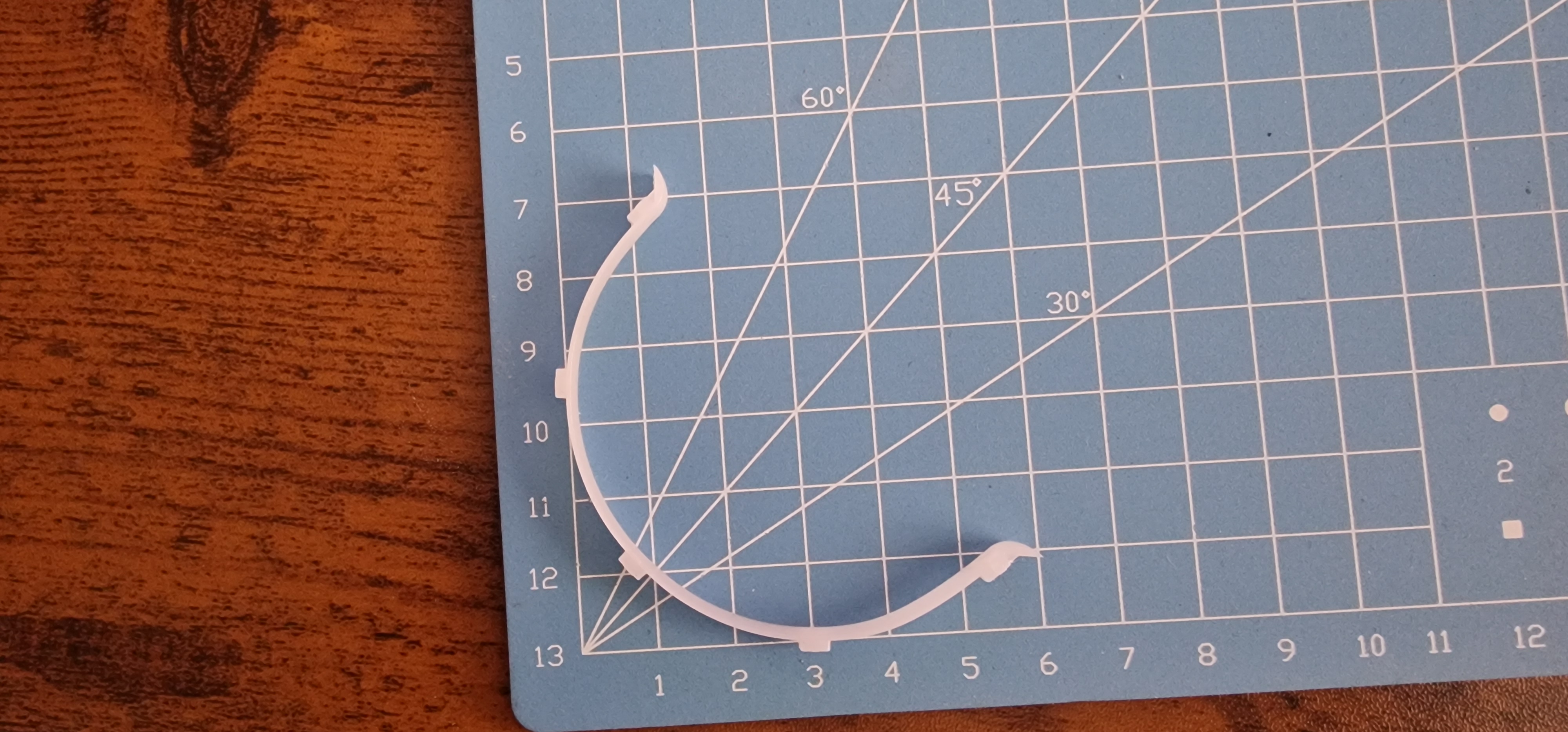
To develop the design, we asked for the actual ring and insert. The customer arranged to send a metal ring, a complete inner piece and a broken one.
The metal ring provided the reference for fit. The complete insert showed the original profile and locating features, while the broken piece provided another reference for the areas needing attention.
Working with physical samples gave us a way to compare the design with the existing hardware and try the printed part in the ring.
Considering material and strength
PETG was the material we proposed for the replacement. The aim was to produce a thin insert that could flex into position while providing a smooth surface against the rail.
During development, we also added a 1.5 mm lip on each side of the design to reinforce the profile. This was a small change to the part's shape, made with the intended use in mind.
Matching the original part and considering where it could be improved were both part of the bespoke design work.
Creating the first test insert
We produced a first prototype and demonstrated fitting it into the customer's metal ring. The short video shows the green insert being positioned inside the existing ring.
Green was simply the colour available for the test piece. It was a prototype colour, with the choice for any finished inserts still to be discussed.
At this stage, the sample had been checked in the metal ring. Testing on the customer's own curtain rail was the next step, particularly around the corners where she had experienced snagging. We offered to send the sample for that assessment before moving towards a larger order.
A bespoke approach to replacement parts
This project shows how a replacement-part enquiry can develop from an existing component into a custom digital design and physical prototype.
The work centred on a specific need: recreating the inner insert so the customer could continue using her existing metal rings, subject to the sample passing the practical checks.
Need a custom replacement part?
If a small component has worn out, broken or become difficult to source separately, get in touch to discuss our bespoke 3D design and printing service.
Photographs, approximate dimensions and a description of how the part works are useful starting points. An original part, a broken example or the item it fits into can also help us assess the project.
Send us the details, and we can discuss what may be possible and prepare a quote for your requirements.
Ready to start?